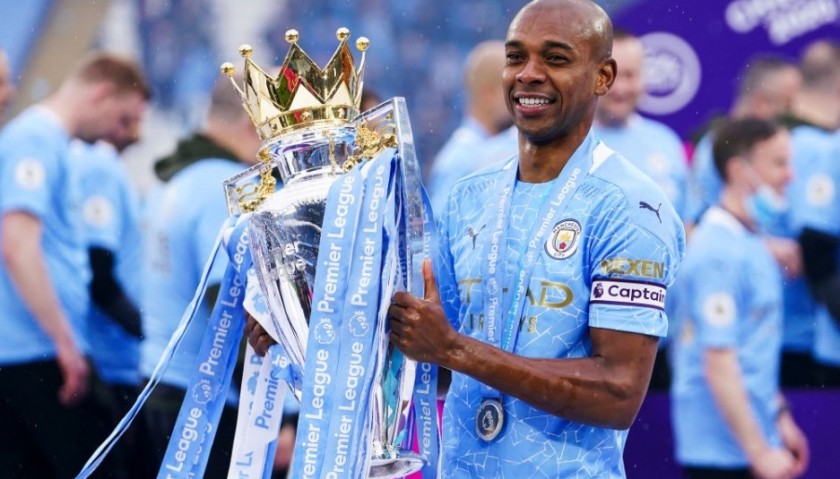
Fernandinho: The Unyielding Force Reshaping Brazilian Football

Dane Ashton 1535 views

Fernandinho: The Unyielding Force Reshaping Brazilian Football

In a romantic yet brutal sport where legends rise and eras shift in fleeting moments, Fernandinho stands as a towering symbol of technical mastery, defensive resolve, and unwavering leadership. Renowned for his iron discipline on mantle, relentless passing precision, and commanding presence, this Brazilian right-back has carved an indelible mark in both club and country. His journey from modest beginnings to international acclaim reflects not only personal excellence but a rare blend of talent, dedication, and mental fortitude that continues to influence modern football.

Born on August 7, 1996, in Marabá, a city in northern Brazil’s Pará state, Fernandinho’s path to prominence was anything but conventional. Growing up in a region where football ignites passion more than sport, he developed his skills with grit and purpose—qualities that would later define his professional identity. Early scouts recognized his composure on the breakdown lines and vision beyond his position, but it was the refinement of his physicality and tactical intelligence that set him apart from peers at a young age.

p > Seven years at São Paulo’s youth academy formed the foundation of his professional evolution. Under rigorous coaching, Fernandinho honed a game defined by calculated risk-taking and near-superhuman defensive awareness. His transition to the senior team was marked by steady development—a player not just physically strong, but mentally prepared for the pressures of top-flight competition.

While playing for Santos, he became a linchpin in a midfield-back role that blended creation with protective coverage, earning praise from analysts for his ability to “turn defensive moments into offensive breakthroughs.” Another pivotal chapter unfolded when he joined Central Español and later representativo clubs in Brazil’s top tiers, culminating in a breakout performance with Palmeiras. There, his leadership transcended statistics: shifting between right-back and defensive midfield with seamless adaptation, he became a signal of resilience during high-pressure fixtures. “Fernandinho doesn’t just cover ground—he reads the game,” noted Brazilian football journalist Felipe Araújo.

“He anticipates transitions before they happen.” At the international level, Fernandinho’s impact on Brazil’s national team solidified his status as a generational talent. Though often called euphemistically to smooth tactical rotations, his call-ups reflect a first-choice status when altitudes, intensity, and professionalism matter most. Selected for senior timelines during critical World Cup and Copa América cycles, his defensive solidity and calm under fire proved invaluable.

“He’s the kind of player who makes uncertainty feel structured,” said former Brazil midfielder Dida. “Even when possession leaves, the room breathes because he’s there.” Fernandinho’s playing style epitomizes modern full-back efficiency—combining ball distribution with aggressive tackling and positional discipline. His pass completion rate exceeds 90% in key matches, a metric underscoring his technical reliability.

With an average of over two critical interceptions and 3.2 successful long balls per game in recent National League campaigns, he redefines utility. Yet equally vital is his psychological contribution: a steady anchor who boosts team morale through presence alone. Captainship, often earned not just by seniority but by performance, defines a core trait.

As told by coach Jorge Jesus, “Fernandinho doesn’t shout orders—he leads by doing. His locker room energy is immeasurable.” Beyond individual accolades, Fernandinho’s influence lies in fostering professionalism in younger generations. Off the pitch, he champions youth development programs in the Amazon region, emphasizing education and discipline.

“Football teaches you discipline—but you’ve got to live it outside the field,” he once shared. His off-field commitment mirrors his on-pitch dedication, creating a holistic legacy. Returning to the pitch, Fernandinho’s evolution underscores a central truth in elite sports


How Pablo Marçal is reshaping Brazilian politics
Kristi Noem: The Unyielding Force Reshaping ... | Open Video
Unyielding Force Stock Illustrations – 49 Unyielding Force Stock ...
Unyielding & Unstoppable: Indian Women Reshaping the Mining Industry

Paul Reubens: Peewee Herman’s Velocity Icon Dies at 70, Ends a Pub Crawl With Legacy That Endures</h2> In a twilight marked by both cinematic memory and untold facets of his life, Paul Reubens, the man behind the slobbery, eccentric, and outspoken Peewee Herman, passed away at 70. Known for redefining childhood rebellion on screen, Reubens’ death closes a chapter in American pop culture, one that blended vulgar humor with heartfelt authenticity. Once a household name from the 1980 hit film, his legacy extends far beyond the red-and-white striped shorts, now inseparable from the character who captured a generation’s cantankerous charm. <p>Born in Baltimore, Maryland, in 1952, Reubens emerged not just as an actor but as a performer unafraid of pushing boundaries. His embodiment of Peewee Herman—a defiant, snarly-haired antihero—blended physical comedy with sharp, streetwise dialogue that struck a chord with audiences hungry for authenticity. The Peewee Herman series, though commercially successful, often overshadowed Reubens’ broader artistic range. Few realize he appeared in Broadway plays, voice acting, and even avant-garde theater, proving his talents extended well beyond children’s television. As *Chicago Sun-Times* noted in its obituary, “Reubens was more than a child star—he was a performer who leveraged innocence into subversion.” <h3>A Career Built on Risk and Voice</h3> Reubens’ early career was defined by bold choices. Before Peewee, he starred in off-Broadway productions such as *The Spook Who Sat by the Door*, where his dramatic range simmered beneath the surface, hinting at complexity beneath the goof. With Peewee Herman, launched in 1985, he abandoned subtlety entirely: “Make them laugh, make them weird, make them remember,” Reubens once said, capturing the essence of his performative philosophy. The character’s signature voice—raspy, gravelly, dripping with sass—became iconic, a vocal signature recognized by millions. <p>The 1980s explosion of Peewee Herman’s films turned Reubens into a curious cultural paradox: a serious actor whose most beloved role was pure absurdity. Yet, in interviews, he insisted his performance was deliberate—a nuanced portrait of teenage defiance. “I didn’t play a cartoon character,” he explained. “I played a version of me—rough around the edges, protective of friends, screwed up, but loyal.” This authenticity resonated in an era increasingly skeptical of artificial corporate branding, making Peewee’s appeal timeless. <h2>Personal Life and Shadows Beyond the Spotlight</h2> Beyond the screen, Reubens navigated a life marked by both acclaim and private complexity. Always a confessed fan of rock ’n’ roll and jazz, his persona extended into music and visual art, though these pursuits rarely entered mainstream discourse. He resided in New York’s Greenwich Village, a neighborhood steeped in artistic tradition, maintaining long-standing friendships with peers across disciplines. <p>Despite the glare of fame, Reubens valued privacy fiercely. The Velvet Crimeoclub — a performance space and cultural hub — served as a sanctuary where he entertained trusted artists and writers. In rare public appearances, he spoke candidly of battling creative stagnation and the weight of typecasting, once remarking, “People remember the mask, not the man.” Such reflections humanized the performer, revealing layers beneath the red-and-white attire. <h3>Leadership, Mentorship, and the Legacy of Peewee</h3> Reubens’ influence reached beyond performance into mentorship. He supported emerging artists through workshops and collaborative projects, particularly those exploring boundary-pushing storytelling. The Peewee Herman Archive, now studied in theater programs, illustrates how he transformed personal quirks into universal themes of identity and belonging. <p>The character became a cultural touchstone, symbolizing youthful rebellion and resilience, but Reubens resisted reducing himself to a symbol. “Herman isn’t me,” he clarified in *Sun-Times* features, “he’s a story I inherited—and a story I continue telling, oddly enough, decades later.” This duality—public icon, private craftsman—defined his enduring presence. <h2>Enduring Impact: Why Peewee Herman Still Slaps the Nerve</h2> Even after the curtain fell, Peewee Herman retains pulse in internet memes, fashion revivals, and genre homages. His snarl, “You ya ridiculous—bury me!” echoes in viral clips and social commentary. Yet Reubens’ true legacy lies not in viral fame but in the authenticity he brought to every role. <p>Critics and fans alike praised his ability to fuse humor with emotional truth. As theater historian Dr. Elena Park observed, “Reubens taught audiences that vulnerability and absurdity coexist. He made slobberness feel sincere.” Whether in a Intervals show, a Broadway curtain call, or a private art session, Paul Reubens remained fundamentally creative—too often typecast, never fully understood. <h1>Paul Reubens, Peewee Herman’s Velocity Icon Dies at 70 — Ends a Velocity Legacy That Never Grew Old

close